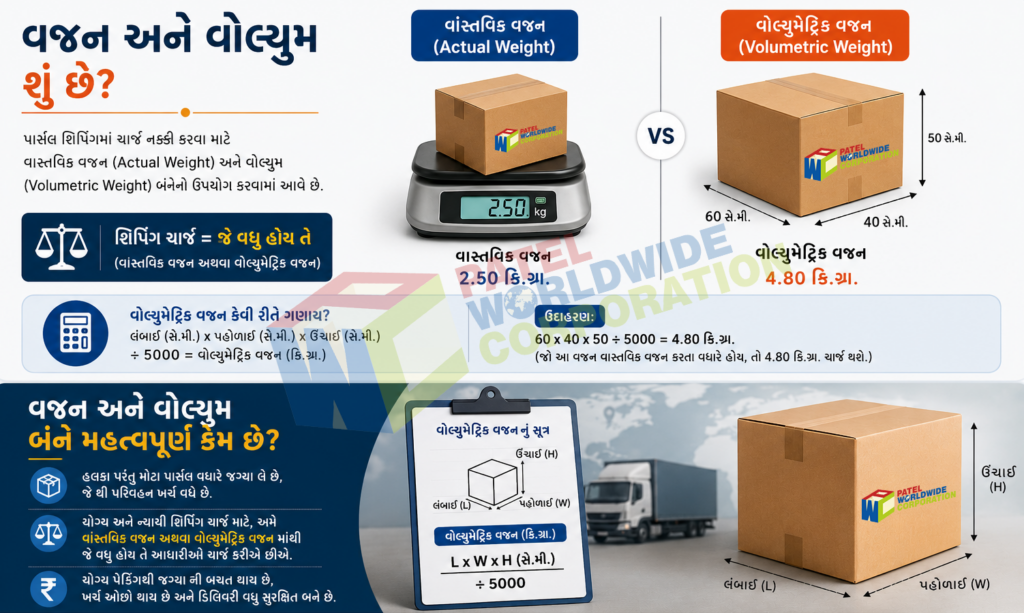
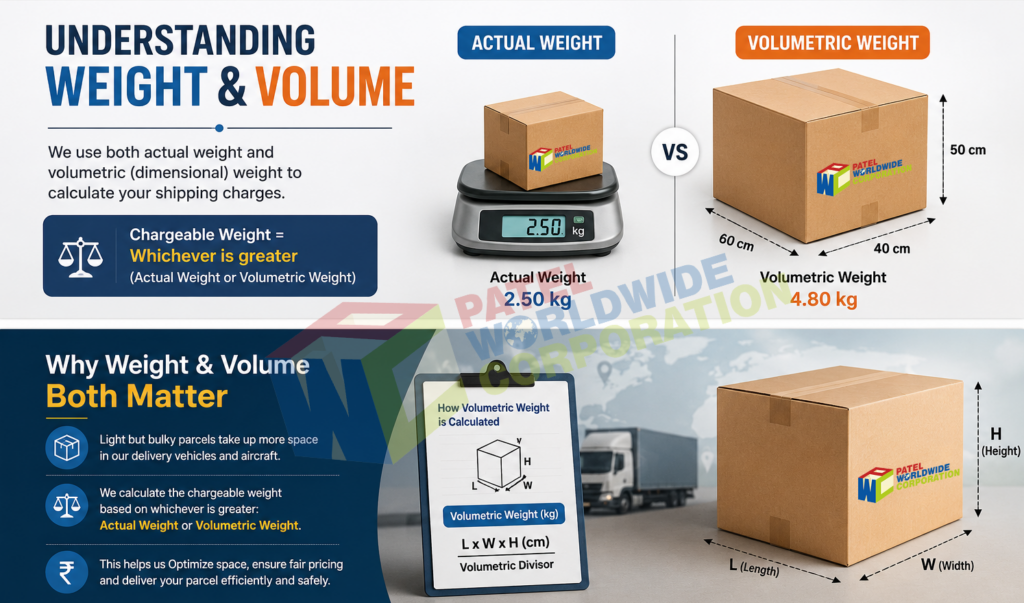
When sending a parcel, shipping charges are not always based on the actual weight alone. Courier companies also consider the volume (or dimensional weight) of a package. A parcel that is lightweight but takes up a large amount of space inside a delivery vehicle or aircraft may cost more to transport than a smaller, heavier package. This ensures that shipping costs fairly reflect the space occupied during transit.
Actual Weight refers to the physical weight of your parcel measured on a weighing scale. Volumetric Weight is calculated using the parcel’s dimensions—Length × Width × Height—and a standard volumetric divisor set by the courier company. The chargeable weight is whichever is greater: the actual weight or the volumetric weight. This method is widely used for domestic and international shipments to optimize transportation efficiency.
To avoid unexpected shipping charges, we recommend measuring and packing your parcel carefully before booking. Using the right-sized packaging helps reduce unnecessary volume, lowers shipping costs, and ensures safe handling during transit. If you’re unsure how your parcel will be charged, our team is always available to help you calculate the most accurate shipping weight and provide the best delivery solution.